


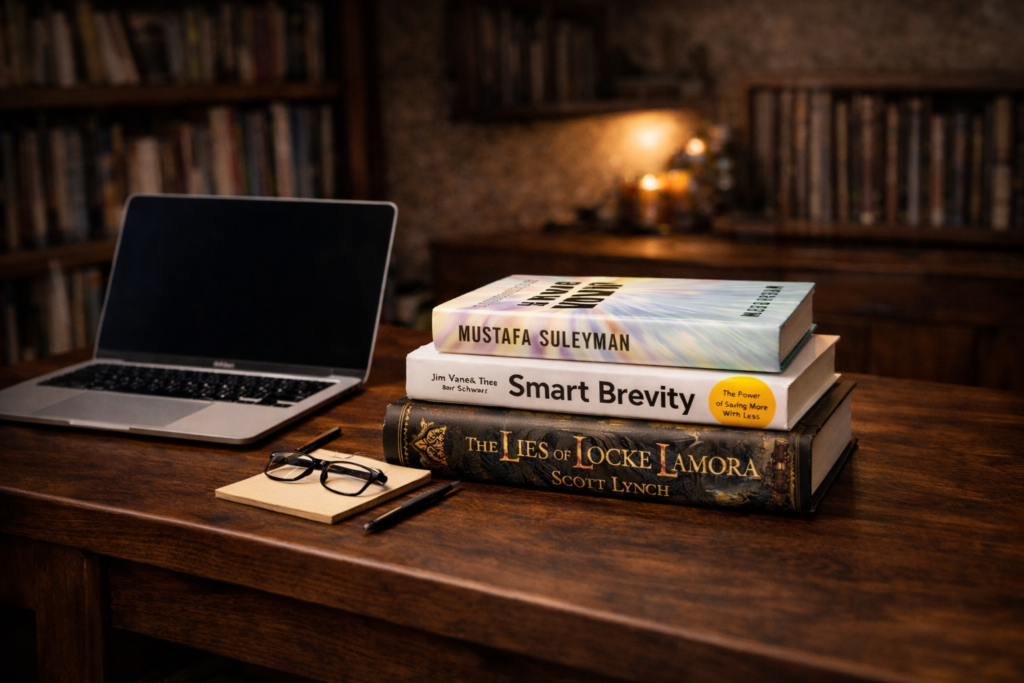
I’ve been meaning to do this for a while [having had the idea back during Covid times, when we were all trying to find ways to stay healthy and sane]. Life however [as has been famously quoted], moves pretty fast…
Anyway, I read quite a lot and a listen to a lot of audiobooks (which helps pass the time when working on the house renovations you promised your better half would be finished in the first two years… *cough*). Every month or so, I’m going to pick three books that I think are worth your time and tell you why. Some of them will be relevant to whatever you do professionally, some of them will just be genuinely excellent and I want more people to have read them, so I have someone to talk to about them!
Let’s give it a go…
The Coming Wave by Mustafa Suleyman

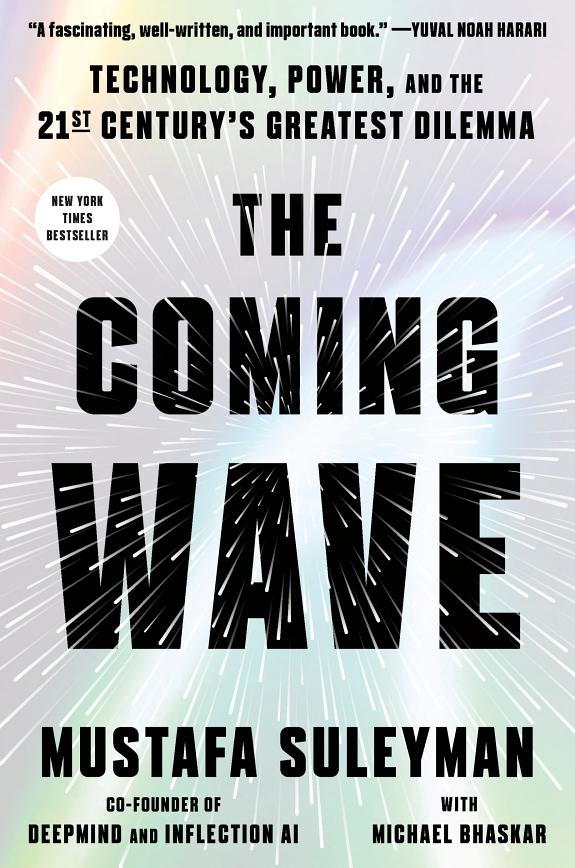
I’ve read a lot of books about technology and AI over the past few years and the vast majority of them follow a fairly predictable structure. Exciting technology, amazing potential, a few paragraphs acknowledging that yes there are some concerns, and then more amazing and this time transformative potential. The Coming Wave doesn’t do that, and I think it’s because Suleyman isn’t a technology commentator who got excited about AI from the outside. He co-founded DeepMind, ran the AI products team at Google, and founded Inflection AI. He isn’t observing this stuff from a distance, he actually helped to invent it and build it.
[In fact last week I also finished “Supremacy” by Parmy Olson, which goes into great deal about his background, and is also a very insightful mini-history of the formation of modern AI. Anyway, back to Waving…]
What makes the book worth reading is that he’s genuinely conflicted about what he helped create. Not in the “we should have conversations about ethics [so I can sell more books]” way you see in a lot of tech writing, but in a much more specific and uncomfortable way. His view is essentially that the containment problem (working out how you prevent these technologies from being used in catastrophic ways, aka the Skynet problem) may not be solvable, and that we’re running out of time to find out. He’s not telling us to panic, but he is telling us that the people who should be solving this aren’t moving fast enough, and he ought to know.
My Goodreads note when I finished it was “slightly disturbing even for someone who works in this space”. For my non-UK friends and colleagues, that’s the British version of the word slightly.
If you’re in any kind of technology leadership role, or perhaps just someone with a pulse, you should read it… tomorrow.
Smart Brevity by Jim VandeHei, Mike Allen and Roy Schwartz

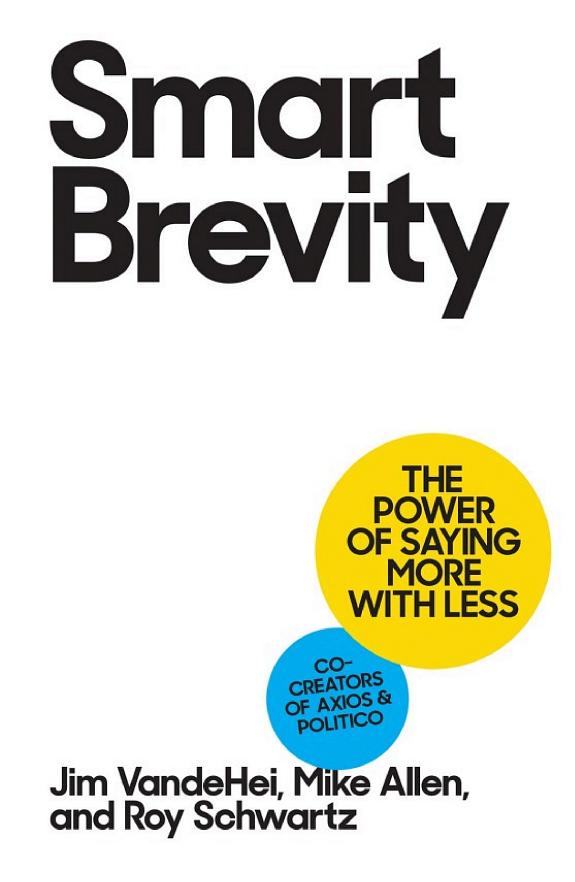
As someone who has been known to occasionally use slightly too many syllables (see definition of “slightly” above), I’ll admit I was a bit sceptical when this was recommended to me. A book about writing shorter things, from the founders of Axios, a publication which is essentially famous for being short. It seemed a bit self-referential, and I was half-expecting 200 pages of fairly obvious advice dressed up in a lot of white space.
I was wrong, which I know because I went back into Goodreads and changed my rating from three stars to five after I’d been using the techniques for a couple of weeks. That doesn’t happen often!
The core idea is straightforward enough; most professional writing is structured backwards, assumes too much patience from the reader, and buries the thing that actually matters somewhere in the middle. The fix isn’t writing better sentences, it’s changing the structure and style entirely. Lead with what matters, make the “why should I care” explicit, and then let people choose how much further they want to go.
Once you start doing this with emails and presentations, you also start noticing how much of what other people send you is padding. Adopting this method saves time for everyone! I’m not saying we should use this for everything (indeed I’m not), in part as it can be a touch dry at times, but it’s certainly worth a go.
If you want easy mode, you can even take a draft email you wrote and ask your favourite LLM to “rewrite this mail using the Smart Brevity framework from Axios (and the book Smart Brevity by Jim VandeHei et al)”. You’ll be amazed at the difference, indeed you might even want to turn that into a Copilot agent… #justsayin
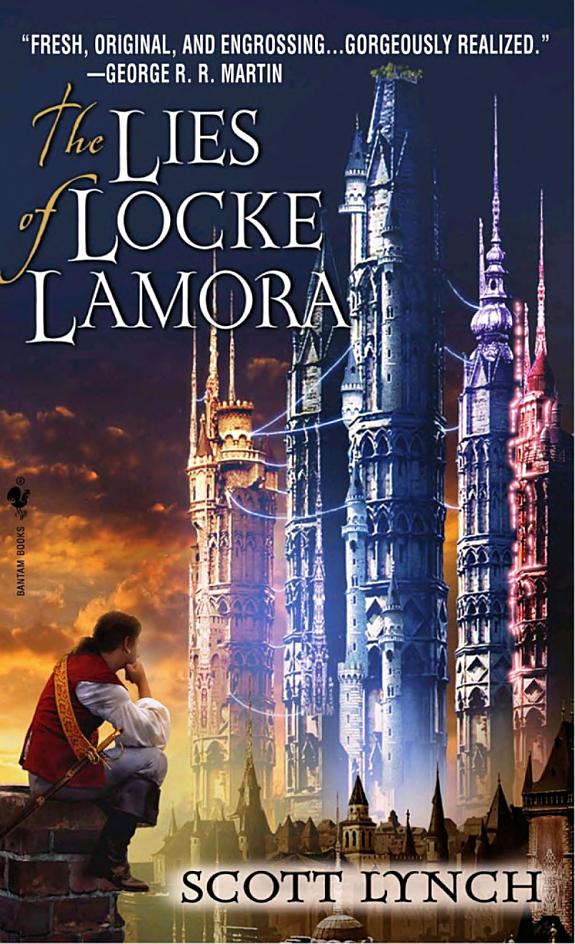
The Lies of Locke Lamora by Scott Lynch

… and now for something completely different.
My #1 favourite author of all time is the amazing, inimitable and [embarras yourself by laughing out loud on the bus in front of strangers]ly hilarious Sir Terry Pratchett. Sadly, Sir Terry is no longer with us, and if you havent read any of his books, just start with “Guards, Guards” and thank me later! Since his passing I’ve been sampling various authors to try to capture a touch of that genious. The Lies of Locke Lamora is probably the closest thing without actually being remotely copy-cat. It’s simply brilliant and I want more people to have read it!
Locke Lamora is a con artist living in a city that feels like Renaissance Venice if Venice had slightly more casual poisoning, and a thieves’ guild with genuinely baffling rules about which parts of the nobility you’re allowed to actually steal from. He and his crew run increasingly elaborate and inadvisable schemes against the city’s upper class, which works out reasonably well, until it very much doesn’t.
I don’t want to say too much about the plot because there’s a moment roughly around page 126, that I didn’t see coming at all, and being told about it in advance would genuinely ruin it! 😉 What I will say is that the dialogue is sharp, Father Chains is now one of my all time favourite characters from any book, and the whole thing has an energy that keeps you reading when you should probably be sleeping.
I’ve read all of the brief series to date and am now [im]patiently waiting for the next one, which has been delayed by several years already! If you have Scott Lynch’s contact details, please send them over.
BookBytes goes out [if the moon phases are fully aligned] on the first or second Tuesday of each month, space-time continuum permitting. Recommendations, abuse, and “you missed an obvious one” notes are all welcome.